
How to keep bees away from hummingbird feeders? Stop the drips and avoid yellow parts. Audubon notes that bees are drawn to yellow, and that bee guards fail if a feeder leaks. Below are fixes for ants, wasps, the foil trick and spoiled nectar, from a farm in Ecuador's Andes.
Why feeder problems start
Almost every feeder problem starts with sugar where it should not be. That is also the key to how to keep bees away from hummingbird feeders. A drip, a sticky port or old nectar invites insects and mould. Get the basics right and most trouble never starts.
This page is about troubleshooting. For the nectar itself, see our guide to what hummingbirds eat and the 1:4 recipe. In short, the recipe is one part white sugar to four parts water, with no dye and no honey.
Troubleshooting table: problem, cause and fix
Find your symptom in the first column, then check the likely cause. The fixes come from Audubon, the National Wildlife Federation (NWF) and Cornell's Project FeederWatch, as linked in the sections below.
| Problem | Likely cause | Fix |
|---|---|---|
| Bees or wasps crowd the ports | Leaks, sticky spills, yellow parts | Tighten parts, wipe spills, use bee guards and an all-red feeder |
| Ants inside the nectar | A path down the hanger | Hang an ant moat filled with plain water above the feeder |
| Nectar looks cloudy | Fermentation or bacteria | Empty, wash with vinegar solution, rinse, refill |
| Black specks or mould | Feeder not cleaned often enough | Scrub every part; clean more often |
| Nectar spoils in a day or two | Heat and direct sun | Move the feeder into shade; fill less, change more often |
| Feeder drips in the wind | A swinging hanger, loose seals | Hang it out of the wind; check the seals |
| One bird chases all the others | Territorial defence | Add feeders out of sight of each other, or cluster several |
| No hummingbirds at all | Old nectar, a hidden feeder, or plenty of flowers nearby | Refresh the nectar, make the feeder visible, be patient |
How to keep bees away from hummingbird feeders
In short: deny bees access to the nectar and remove every trace of spilled sugar. Feeder design does most of the work, and cleaning does the rest.
Audubon's pest guide gives three tips. Bee guards shield the nectar, but they are useless if the feeder leaks. Mop up spills with a sponge and hot water at least once a week. And if the problem continues, avoid feeders with yellow decor, because bees are attracted to that colour.
Saucer-style feeders are the other half of how to keep bees away from hummingbird feeders. Birds & Blooms explains that in a saucer, the nectar sits beyond the reach of a bee's short tongue. A hummingbird's long tongue reaches it easily.
Poison is never the answer to how to keep bees away from hummingbird feeders. Do not spray insecticide on or near a feeder. Audubon recommends an insecticide-free yard. Emma Greig of Cornell's Project FeederWatch, quoted by Birds & Blooms, warns that pesticides may harm birds and declining bees alike.
Red vs yellow parts: why colour matters
Red attracts hummingbirds, and yellow attracts bees. Colour is the simplest part of how to keep bees away from hummingbird feeders. So the best feeder for bee trouble is mostly red, with red or clear ports.
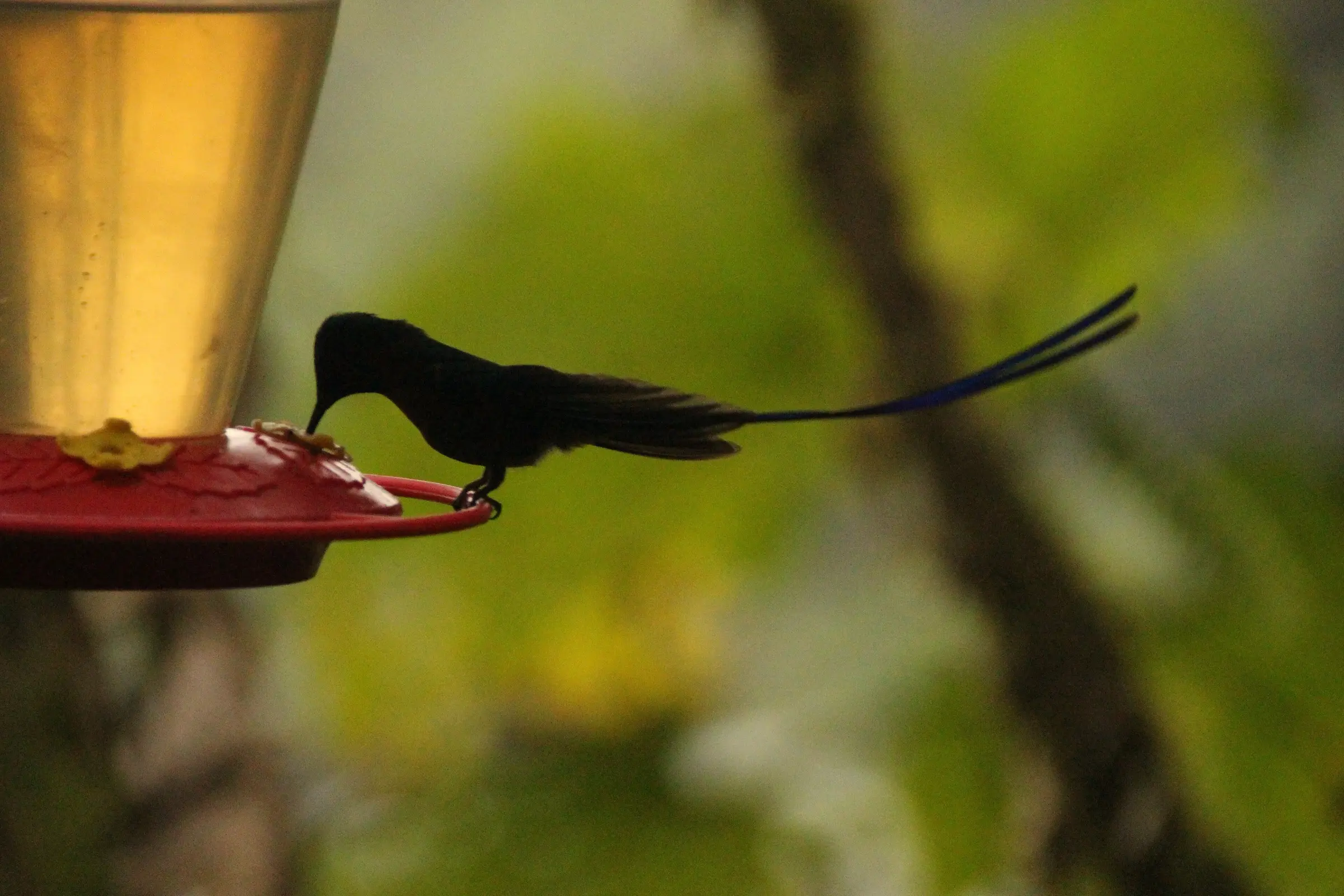
Many feeders still come with little yellow plastic "flowers" on the ports, like the one in the photo above. If bees are a problem, swap them for red ones or choose another model. Never colour the nectar itself. The National Wildlife Federation warns that dyes can be harmful to hummingbirds. The red plastic is enough.
How do you keep ants out of a hummingbird feeder?
Use an ant moat: a small cup of plain water that hangs above the feeder. Ants walk down the hanger, reach the water and cannot cross it.
Audubon says some feeders have a moat built in, and attachable ant guards are sold for those that don't. Ants do not hurt hummingbirds, but they crawl into the ports, clog them and drown in the nectar. Keep the moat topped up, since it dries out in sun and wind. Use plain water only.
Why wrap a hummingbird feeder in foil?
People wrap the nectar bottle in aluminium foil to reflect sun and keep the sugar water cooler. Cooler nectar should ferment more slowly. That's the whole idea.
Here is the honest part. We found no recommendation for foil from Audubon, the National Wildlife Federation or the Cornell Lab. The articles that promote it come from home and food media. Even one of them, House Digest, admits there is no guarantee it stops nectar from spoiling. We found no study on foil and feeder nectar.
If you try it, wrap only the reservoir and keep foil well away from the ports. Shiny material near the ports could put birds off. A better first step is simpler: hang the feeder in shade and change the nectar more often. Those two habits are what the bird organisations actually recommend.
How often should you change hummingbird nectar?
About twice a week in warm weather, and every day or two in real heat. Change it at once if it turns cloudy or shows mould.
Audubon advises changing the nectar twice a week when it's warm. The National Wildlife Federation goes further: clean the feeder every one to three days depending on the weather, and daily or every other day when it's hot. A practical rule is to fill only what the birds will drink before the next change.
For cleaning, Audubon's long-standing advice is one part white vinegar to four parts water, about once a week. The NWF suggests hot water and a weak vinegar solution with a bottle brush. Then rinse well, several times, before refilling. Clean, rinsed feeders also attract fewer insects.
Signs that nectar has spoiled
Fresh nectar is clear. Throw it out if you see any of the warning signs below.
- Cloudy or milky water. The sugar has started to ferment.
- Visible mould or mildew. Check the ports, where it often hides.
- Dead ants or bees inside. The feeder needs emptying and a full wash.
- It is past its change date. Change it on schedule, even if it still looks clear.
Sun, heat and placement
Shade is the single best defence against spoiled nectar. Hang feeders where the birds can see them, but out of direct afternoon sun and strong wind.
Wind matters as much as heat. Audubon suggests less breezy spots and tightly fitted parts, because a swinging feeder drips. Bring feeders in during rough weather if they spill. Hang them where you can reach them easily, too. A feeder that is awkward to take down rarely gets cleaned on time.
Our climate in Cuyuja is cool and very wet. The parish reports mean temperatures of 10–16 °C and humidity above 80% all year. That slows spoiling compared with a hot garden, but humidity favours mould. So our feeders will be checked every day and changed at least twice a week.

Bully birds: when one hummingbird guards the feeder
One bird chasing every other away is normal behaviour. Hummingbirds defend food because they burn energy so fast.
In an Audubon article, ornithologist Scott Weidensaul gives two fixes. You can hang several feeders far apart or out of sight of each other, for example around a corner. Or you can cluster many feeders in one spot, until no single bird can chase everyone away.
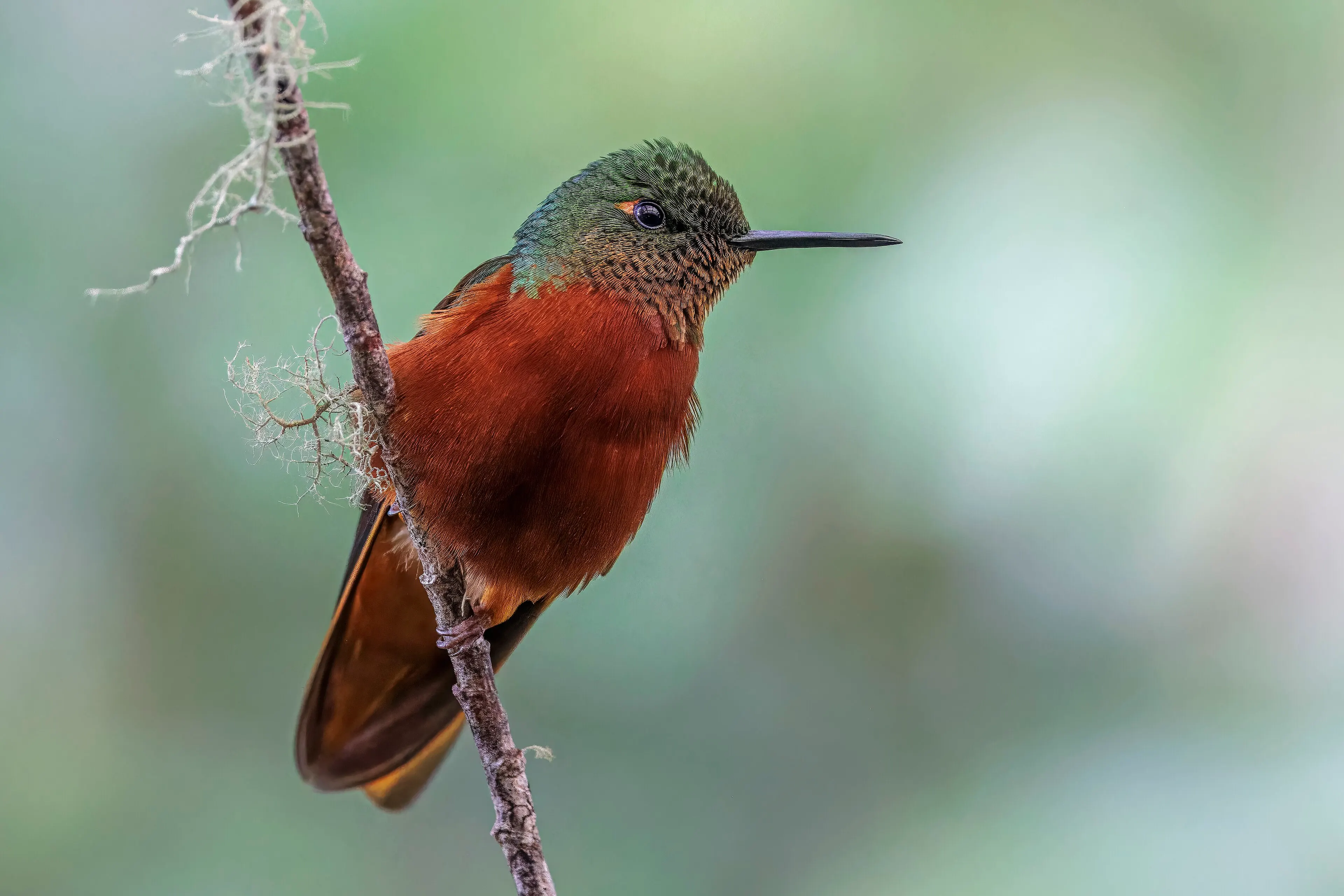
In the Andes, the usual bullies are coronets. The chestnut-breasted coronet is often the dominant bird at feeders along our road. Learn to recognise them in our coronet ID guide.
9 fixes: a hummingbird feeder checklist
Run through this list whenever a feeder starts causing trouble. It sums up how to keep bees away from hummingbird feeders, and it also covers ants, spoilage and fights.
- Use the 1:4 recipe: one part white sugar to four parts water, no dye, no honey.
- Choose a mostly red feeder with bee guards and no yellow parts.
- Tighten every seal and check for drips after each refill.
- Hang an ant moat above the feeder and keep it full of plain water.
- Hang it in shade, out of the wind but easy for you to reach.
- Change the nectar about twice a week, and every day or two in heat.
- Wash weekly with 1 part white vinegar to 4 parts water, then rinse well.
- Throw out cloudy nectar at once, whatever the schedule says.
- Add more feeders if one bird defends the only one you have.
How our feeders will work at San Pedrito
Finca San Pedrito is a family hummingbird lookout in Cuyuja, on the road from Quito to Baeza, about 30 minutes past Papallacta. It is not open yet.
When we open, our feeders will follow the checklist above, including what we know about how to keep bees away from hummingbird feeders. We will use plain 1:4 nectar, all-red feeders and daily checks. The feeders will also sit beside native flowers, so the birds always have their natural food. See the plants we grow for hummingbirds and how to plan a visit.
Hummingbird feeder problems: FAQ
How do you keep bees away from hummingbird feeders?
Stop the leaks and choose the right feeder. That is how to keep bees away from hummingbird feeders: use a saucer-style feeder with bee guards, avoid yellow parts, wipe up spills, and keep the nectar at the normal 1:4 strength.
Why do people wrap hummingbird feeders in foil?
To keep the nectar cooler in strong sun, so it spoils more slowly. It is a home hack, not advice from Audubon, the National Wildlife Federation or Cornell. Shade and fresh nectar do the same job with more certainty.
How do I stop ants getting into my hummingbird feeder?
Hang an ant moat, a small cup of plain water, above the feeder. Many feeders have one built in. Ants cannot cross the water, and the birds are not affected.
How often should you change hummingbird nectar?
About twice a week in warm weather, according to Audubon. In real heat the National Wildlife Federation advises cleaning every day or two. Change it at once if it looks cloudy or has mould or insects in it.
What does spoiled hummingbird nectar look like?
Cloudy instead of clear, with mould, mildew or dead insects floating in it. If you see any of these, empty the feeder, wash it and refill with fresh nectar.
Do bees hurt hummingbirds?
No, not directly. Audubon notes that ants and bees do not harm hummingbirds. The real problem is that a crowd of insects keeps the birds away and fouls the nectar.
Sources
- Audubon Magazine, How to keep your hummingbird feeder free from pests (ants, bees, yellow decor, bee guards, spills, nectar changes, wind).
- Audubon Magazine, Why do hummingbirds fight so much? (Scott Weidensaul, 2024; spacing or clustering feeders).
- Audubon, How to make hummingbird nectar (1:4 recipe; no honey, no red dye).
- National Wildlife Federation, Your guide to hummingbird feeders (cleaning every 1–3 days, vinegar, insect guards, dyes).
- Birds & Blooms, Natural ways to keep bees and wasps away from hummingbird feeders (saucer feeders; Emma Greig, Project FeederWatch, on pesticides).
- House Digest, Why people wrap aluminum foil around hummingbird feeders (the foil claim and its limits).
- GAD Parroquial de Cuyuja, Datos generales (climate: 10–16 °C, humidity above 80%).