
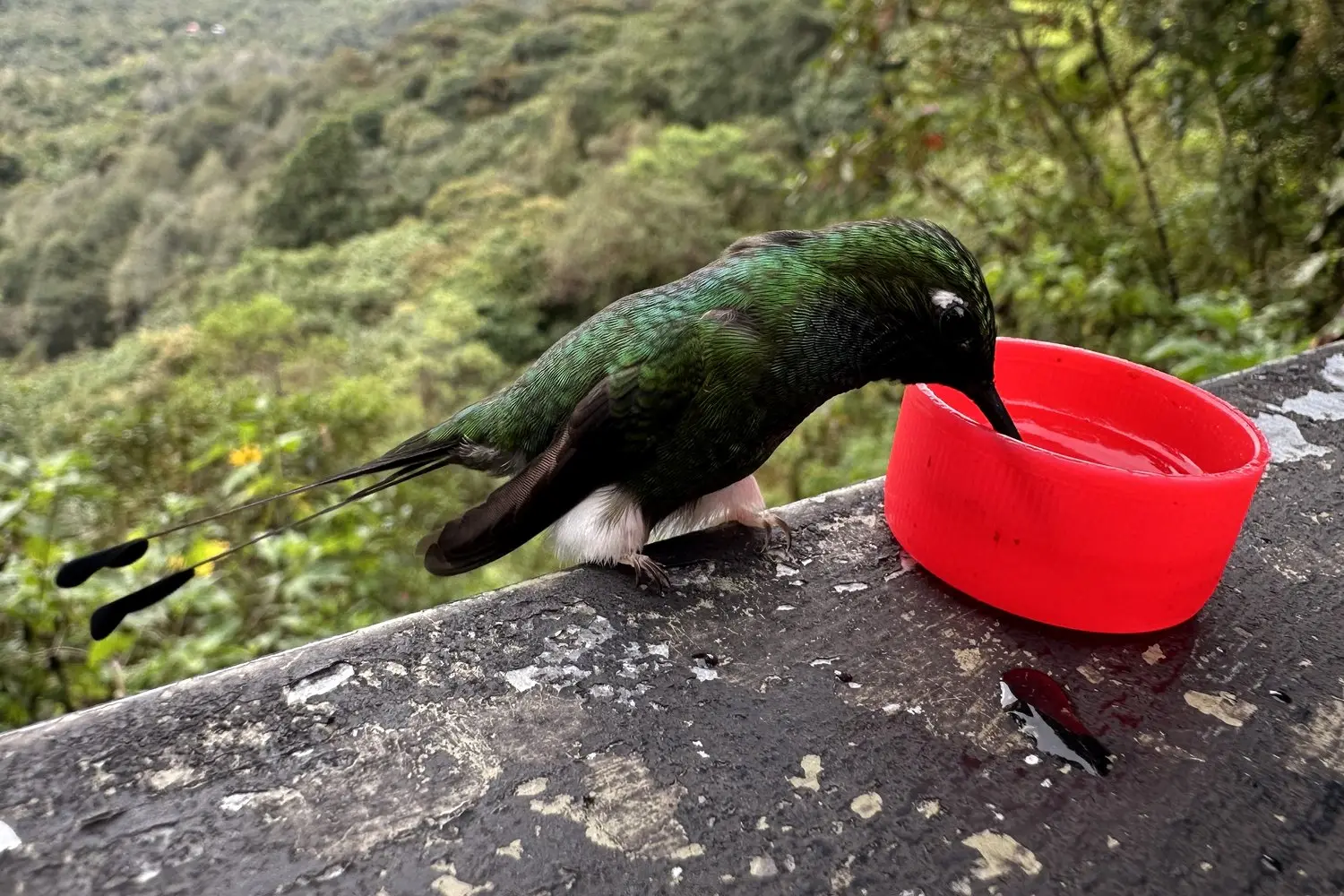
Hummingbird photography in Ecuador's cloud forest needs a fast shutter, soft light and patience. Use 1/2000 s or faster for sharp wings, or low-power flash to freeze them. Keep the background at least 1 m behind the bird. These 7 field tips come from our lookout near Cuyuja, at 2,330 m.
What are the best settings for hummingbird photography?
Start at 1/2000 s, f/4–f/7.1 and Auto ISO, in burst mode. Add low-power flash if you want fully frozen wings (The-Digital-Picture.com).
| Shutter (natural light) | 1/2000 s or faster; 1/4000 s if light allows |
|---|---|
| Flash | Low power (about 1/16) for a burst of roughly 1/16,000 s; flash about 40–45 cm (15–18 in) from the bird |
| Aperture | f/4–f/7.1 |
| Background | At least 1 m (3 ft) behind the bird, and more is better |
| Lens | 100–400 mm or 70–300 mm telephoto zoom |
| ISO | Auto ISO with your chosen shutter speed; cloud-forest light is often dim |
| Drive | Continuous / burst |
1. Freeze the wings (or don't)
Decide first whether you want a little wing blur or none at all. Hummingbird wings move too fast for most natural-light shots to freeze completely. At 1/2000 s you'll get sharp bodies with a little wing blur, which many people like. At 1/4000 s you get closer to frozen.
For totally frozen wings, photographers use flash. At low power (around 1/16) a flash fires for about 1/16,000 of a second. That short burst, not the shutter, stops the motion. Keep the flash about 40–45 cm from the bird.
2. Work with cloud-forest light
Expect soft, dim light and raise your ISO instead of slowing the shutter. At 2,330 m on the eastern slope the light is usually soft and grey, with mist rolling up the valley. That is flattering, because there are no harsh shadows. But it is dim, so use Auto ISO.
Go out early. Mornings are usually when hummingbirds are most active, and they are often clearer before the clouds build up.
3. Pick the perch, not the feeder
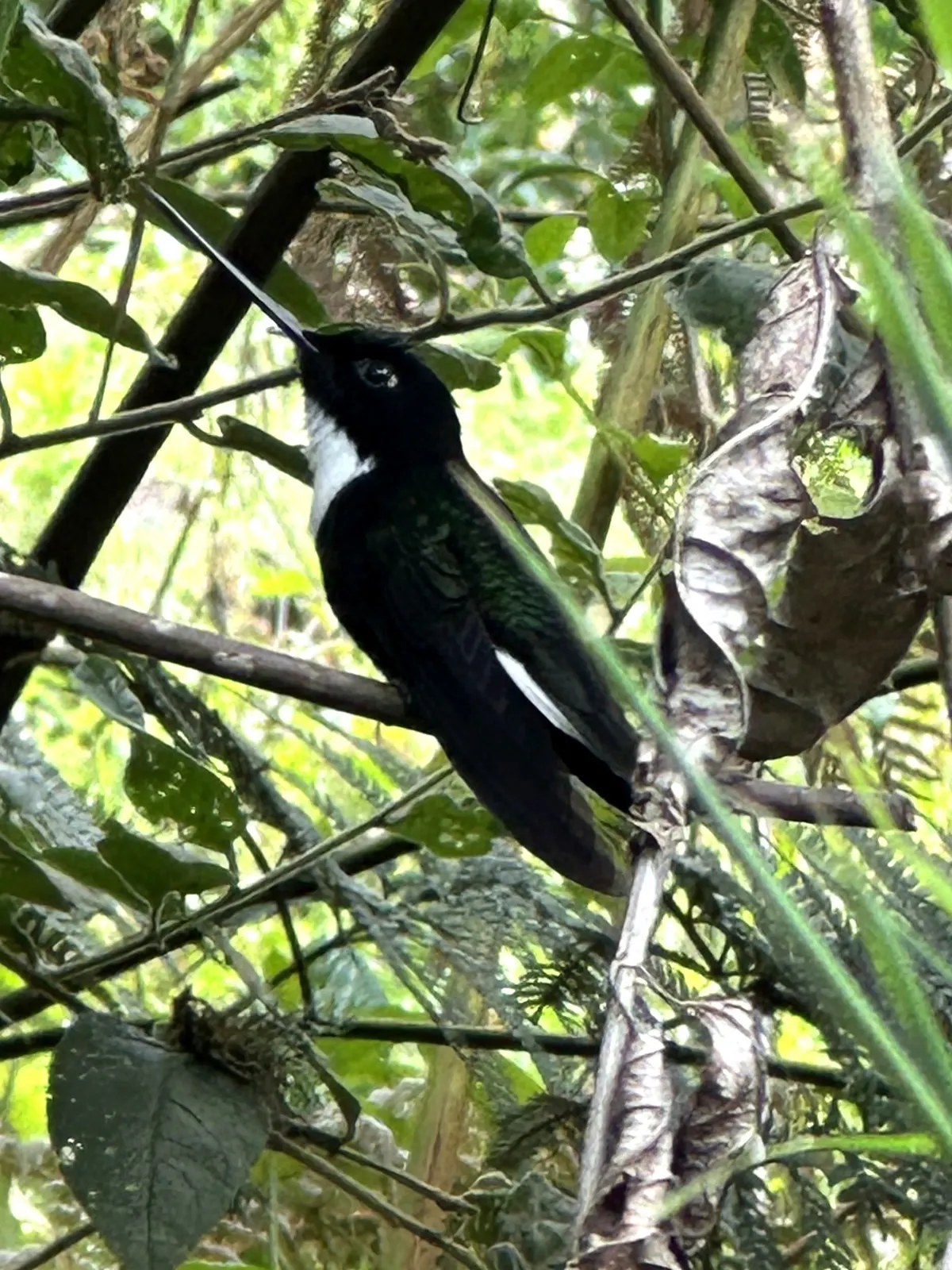
Feeder shots look like feeder shots. The best images show a bird on a natural branch or at a native flower. Hummingbirds often rest on a favourite twig near the food between visits. Find it, frame it, and wait.
Check the background first. A perch with distant forest a few metres behind it gives a smooth green backdrop. A perch in front of a roof, wires or a bright sky does not.
In our garden we are placing natural perches 1–2 m from the flowers. Each one has a clean, distant background, with the morning light behind the photographer. How we design the garden.
4. Know your subjects
Each species has its own habits, and knowing them tells you where to point the camera.
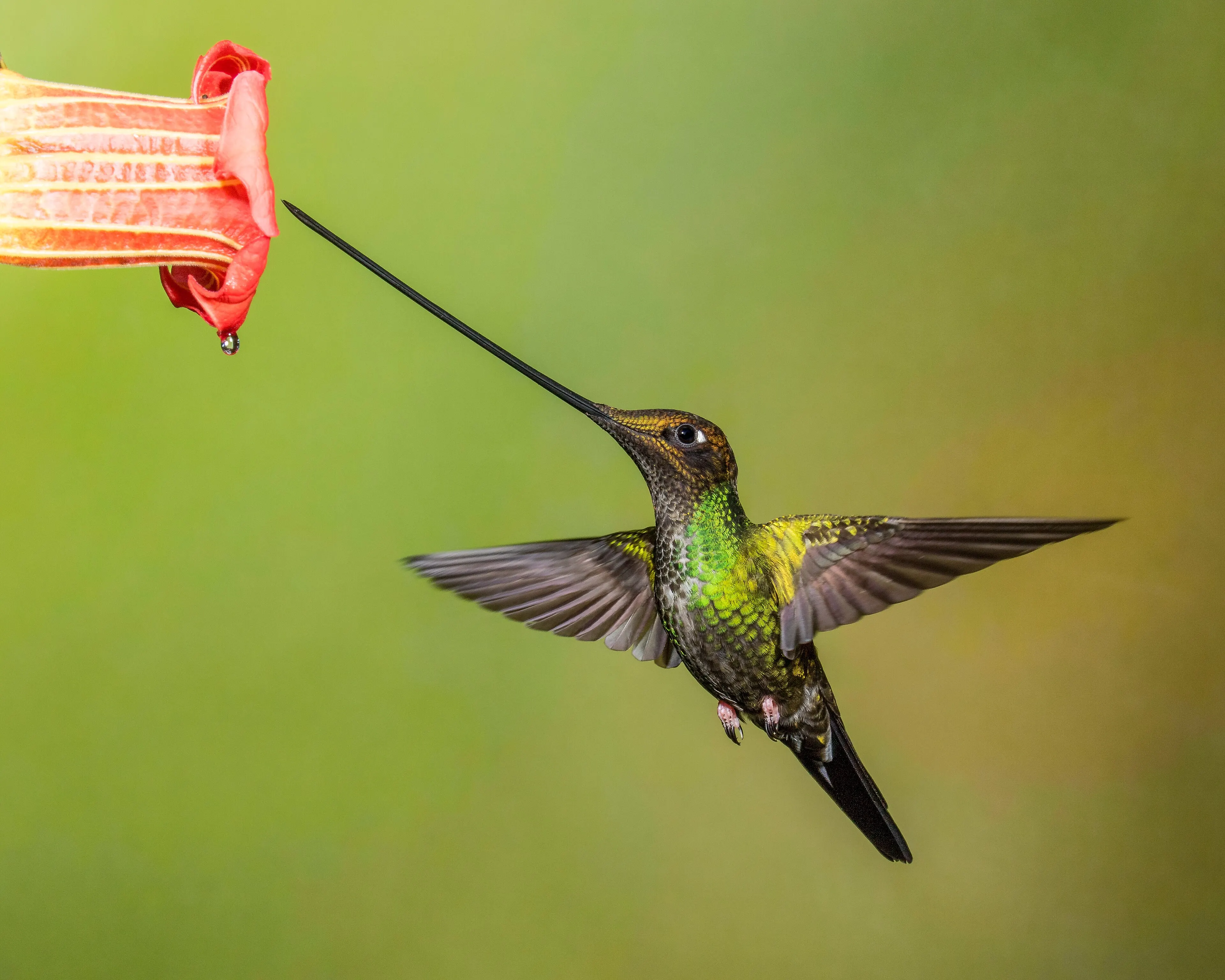
- Sword-billed hummingbird: perches with its bill pointing up, so leave room in the frame. Guide.
- Coronets: hold their wings up for a second after landing at a flower. Be ready for that moment. Guide.
- Tourmaline sunangel: the rosy throat only lights up when the bird faces you, and it often feeds low. Guide.
- Collared inca: trap-lines between flowers, so it returns to the same spots. Wait for it. Guide.
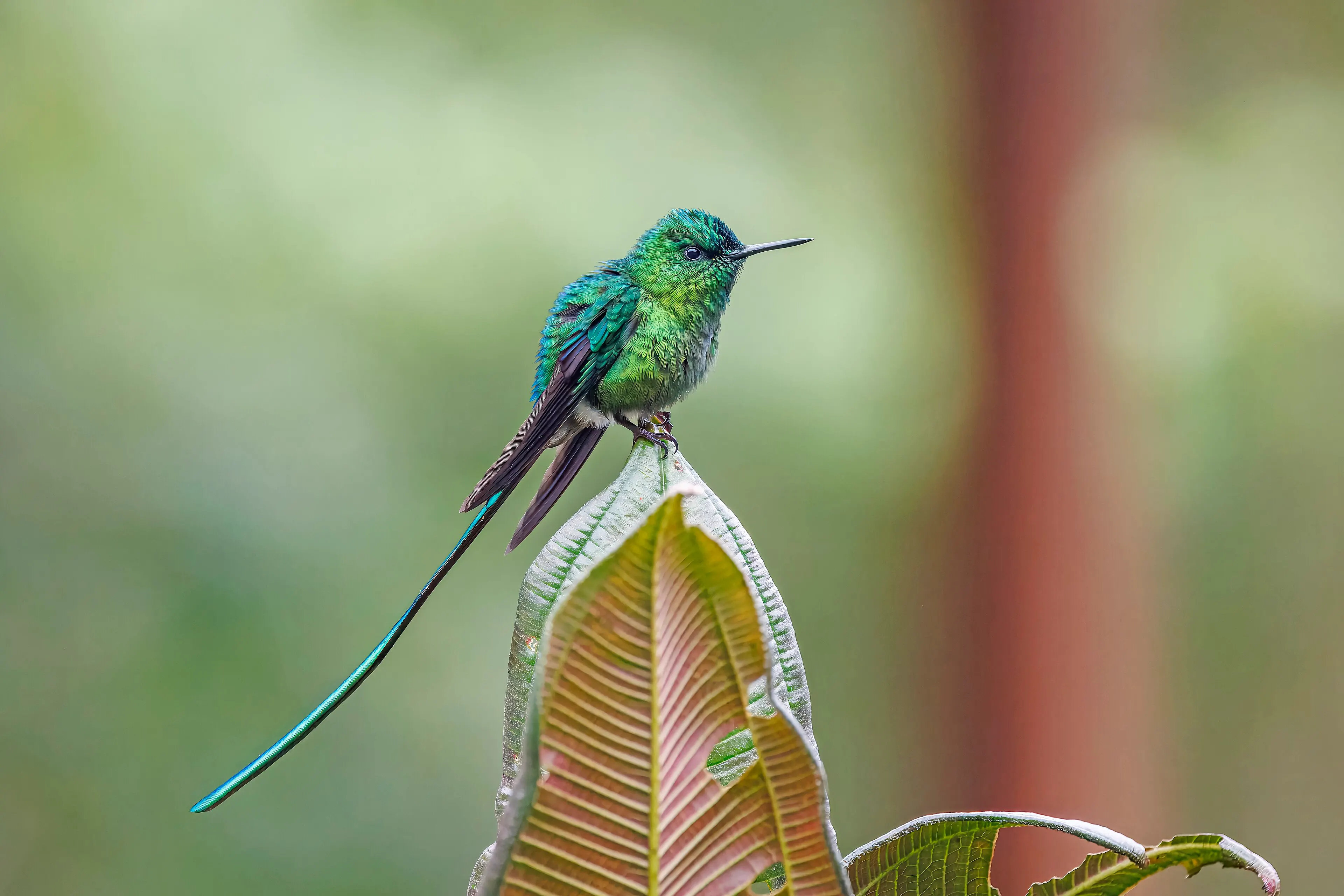
- Long-tailed sylph: frame wide, or the tail gets cut off. Guide.
5. Can you photograph hummingbirds with a phone?
Yes, if the bird perches close. You don't need a big camera to get a good hummingbird photo. Perched birds at close range are very doable with a modern phone. Get as close as the bird allows and tap to focus on the eye.
Use burst mode, brace your elbows and avoid digital zoom when you can. The photo at the top of this page was taken with a phone.
6. Ethics: the bird comes first
Good hummingbird photography never costs the bird anything. These are the rules we will ask guests to follow at the lookout.
- Never touch or handle hummingbirds, and don't move nests or branches near nests.
- Use flash sparingly and at low power; keep sessions short.
- Never block a bird's way to a flower or feeder.
- Don't use playback to lure birds at the lookout.
- Feeders should hold only white sugar and water (1:4), no dyes, cleaned weekly.
7. Rain gear for your camera
It can rain in any month in Cuyuja, and humidity stays above 80% all year. Bring a rain cover or a plastic bag for the camera. Pack a microfibre cloth for the lens and silica gel packs for your bag. See what else to bring.
Hummingbird photography gear checklist
A telephoto zoom, a rain cover and warm clothes matter most. Here is what we would pack for a morning at the lookout. You don't need all of it. A phone and patience already get you started.
- Camera body with a fast burst mode, or a modern phone.
- Telephoto zoom, 100–400 mm or 70–300 mm.
- One or more flashes, if you want fully frozen wings.
- Spare batteries and memory cards.
- Rain cover or plastic bag, microfibre cloth and silica gel packs.
- Warm layers and a rain jacket for you, because it is 10–16 °C here.
- Binoculars, to find the favourite perches before you shoot.
Where to practise hummingbird photography in Ecuador
Try the cloud-forest gardens on either side of the Andes. Ecuador has many hummingbird gardens on both slopes of the Andes. On the west side, Mindo and the Tandayapa valley are known for photo-friendly gardens. On the east side, the Papallacta–Baeza road has high-elevation species such as the Sword-billed Hummingbird and the coronets.
Our own lookout is near Cuyuja, at about 2,330 m. It is not open yet. So far we have photographed the Collared Inca on the farm. See which species live in this valley.
Hummingbird photography: FAQ
What shutter speed do I need for hummingbirds?
About 1/2000 s or faster to get sharp wings, ideally 1/4000 s. To freeze the wings completely, most photographers use flash. At low power (around 1/16), a flash burst lasts roughly 1/16,000 s.
What lens is best for hummingbird photography?
A 100–400 mm or 70–300 mm telephoto zoom works well at feeders and flower patches. The birds come close, but you need to stay back so you don't disturb them.
How do I get a soft, clean background?
Choose a perch with the background at least a metre (3 ft) behind the bird; more is better. Shoot at f/4–f/7.1. Shaded spots with distant green forest behind give the nicest backdrops.
Can I photograph hummingbirds with a phone?
Yes, when a bird perches close. Perched birds are easier than birds in flight. Tap to focus on the bird, use burst mode and keep still. Some of the photos on this site were taken with a phone.
Is flash bad for hummingbirds?
Used sparingly and at low power, flash is common in hummingbird photography. Keep sessions short, never block a bird's access to food and never touch or handle birds.
Sources
- The-Digital-Picture.com, Hummingbird photography tips.
- Really Right Stuff, Photographing hummingbirds in flight.
- Audubon, How to make hummingbird nectar.
- Birdwatcher's House, Mindo (natural perches and backgrounds), Not Your Average American.