
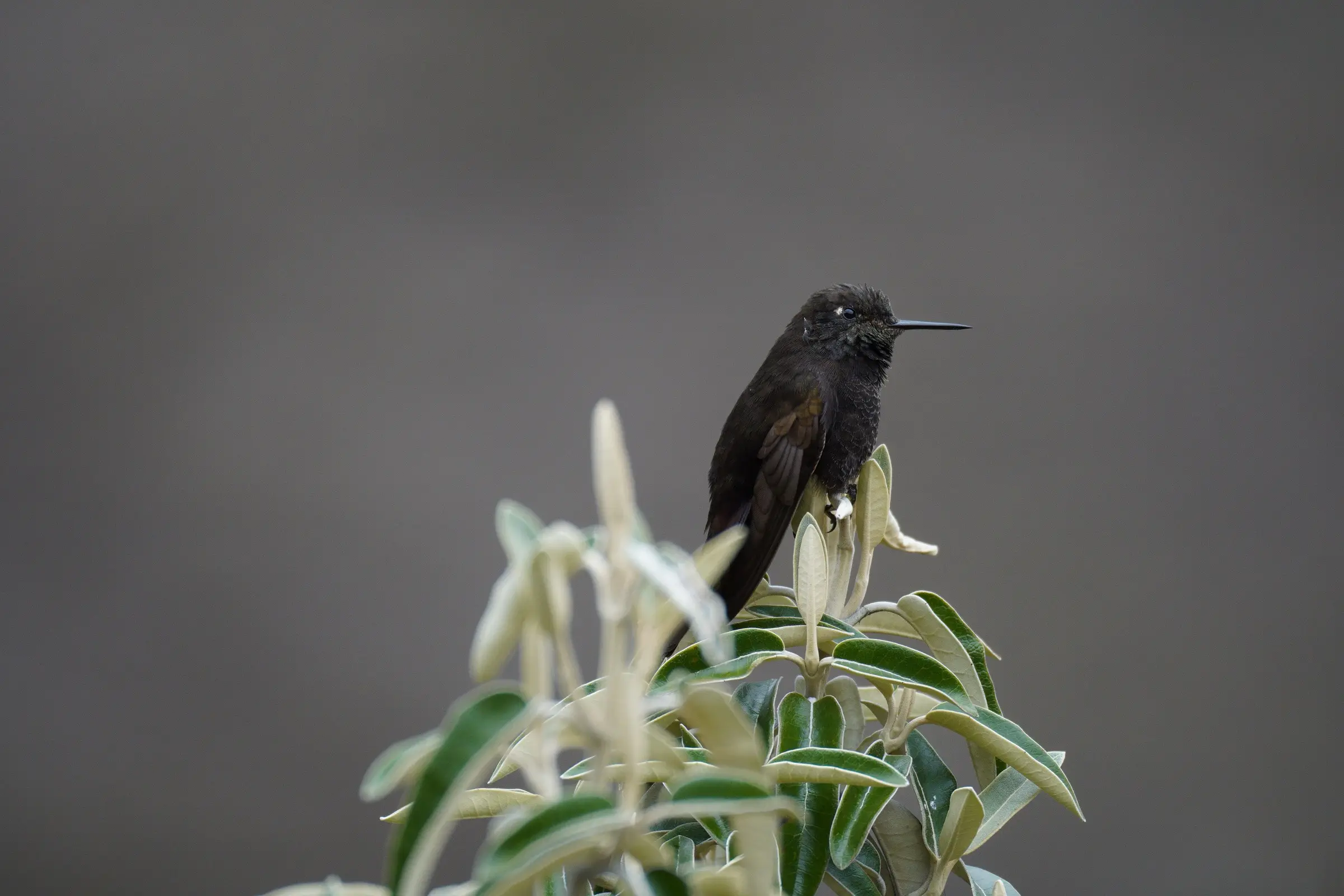
Where do hummingbirds sleep? Alone, perched on a small, sheltered branch, and females on their nest. On cold nights many drop into torpor, slowing their metabolism to about 1/15 of normal, says Wikipedia. In the high Andes, one bird's body fell to 3.26 °C. Here is how it works, from our farm at 2,330 m.
Where do hummingbirds sleep at night?
On small branches in a sheltered spot, out of the wind and cold. That is how BirdWatching magazine describes it. Females that are raising young sleep in the nest with their chicks.
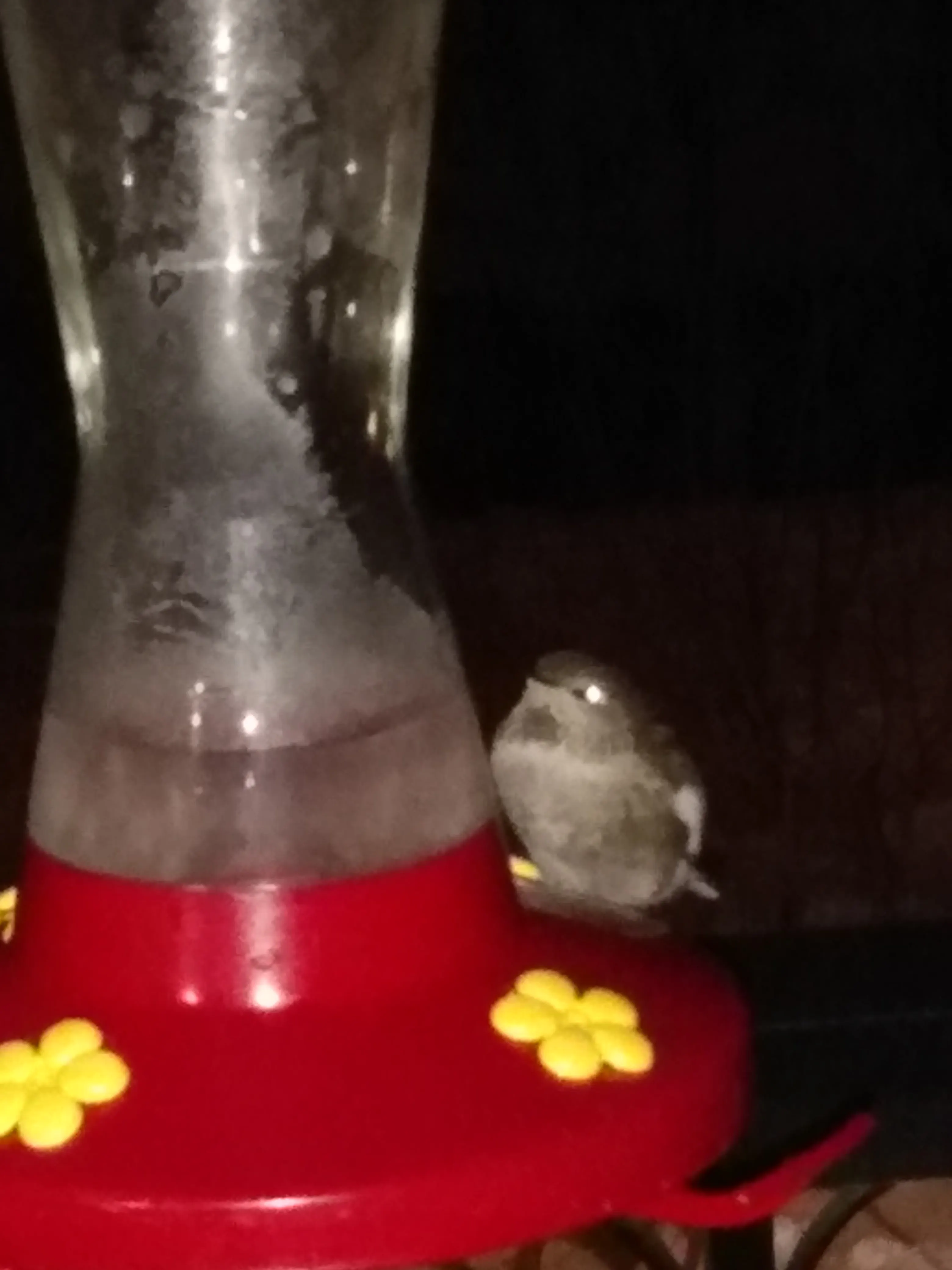
So where do hummingbirds sleep when there is no nest? On a perch, and sometimes that perch is a feeder. The bird in the photo above went into torpor right on the feeder it had been defending, on a night of −8 °C.
A sleeping hummingbird can also slip. Journey North describes torpid birds that look still and lifeless, hanging upside down on a feeder. They are usually alive.
Do hummingbirds sleep or go into torpor?
Both. On a mild night a hummingbird can simply sleep. When it is cold or food has been short, it can drop into torpor, a deep, sleep-like state that saves energy.
The Smithsonian's National Zoo explains why they need it. Their feathers insulate poorly and their energy needs are enormous. Torpor lets them switch off when they can't hold their normal body temperature of about 105 °F (40.5 °C). It can happen any night of the year.
Wikipedia adds two details. A bird with more fat is less likely to use torpor. And non-territorial, subordinate birds tend to stay torpid longer than the dominant bird guarding the best flowers.
Active vs torpid: the numbers
This table compares an active hummingbird with one in torpor, using published figures.
| Measure | Active | In torpor | Source |
|---|---|---|---|
| Body temperature | About 40 °C (105 °F) | 18 °C in a Caribbean hummingbird; 3.26 °C in one Andean Black Metaltail | Smithsonian; Wikipedia; Wolf et al. 2020 |
| Heart rate | Over 1,000 beats a minute by day | About 50–180 beats a minute; as few as 40 in the Andes | Wikipedia; Science News Explores |
| Metabolism | Normal | About 1/15 of normal | Wikipedia |
| Energy use | Very high | Roughly 95% lower in high-Andean birds | Science News Explores |
| Kidney filtration | Normal | Drops to zero, saving body water | Wikipedia |
| Posture | Alert, moving | Fluffed up, still, often bill pointing up | Science News Explores |
Where do hummingbirds sleep in the high Andes?
In the cold, and often in deep torpor, which seems to be routine there. A team led by Blair Wolf monitored 26 hummingbirds of six species overnight at about 3,800 m in Peru. Their 2020 study found that every species used pronounced torpor.
One Black Metaltail reached a body temperature of 3.26 °C. That is the lowest yet reported for any bird or non-hibernating mammal. Depth and length of torpor varied by species, and birds that stayed torpid longer lost less weight overnight.
Wikipedia summarises more figures from that work. On cold nights, birds stayed torpid for 2 to 13 hours. They cooled at about 0.6 °C per minute and rewarmed at 1 to 1.5 °C per minute. They still lost about 6% of their body weight each night.
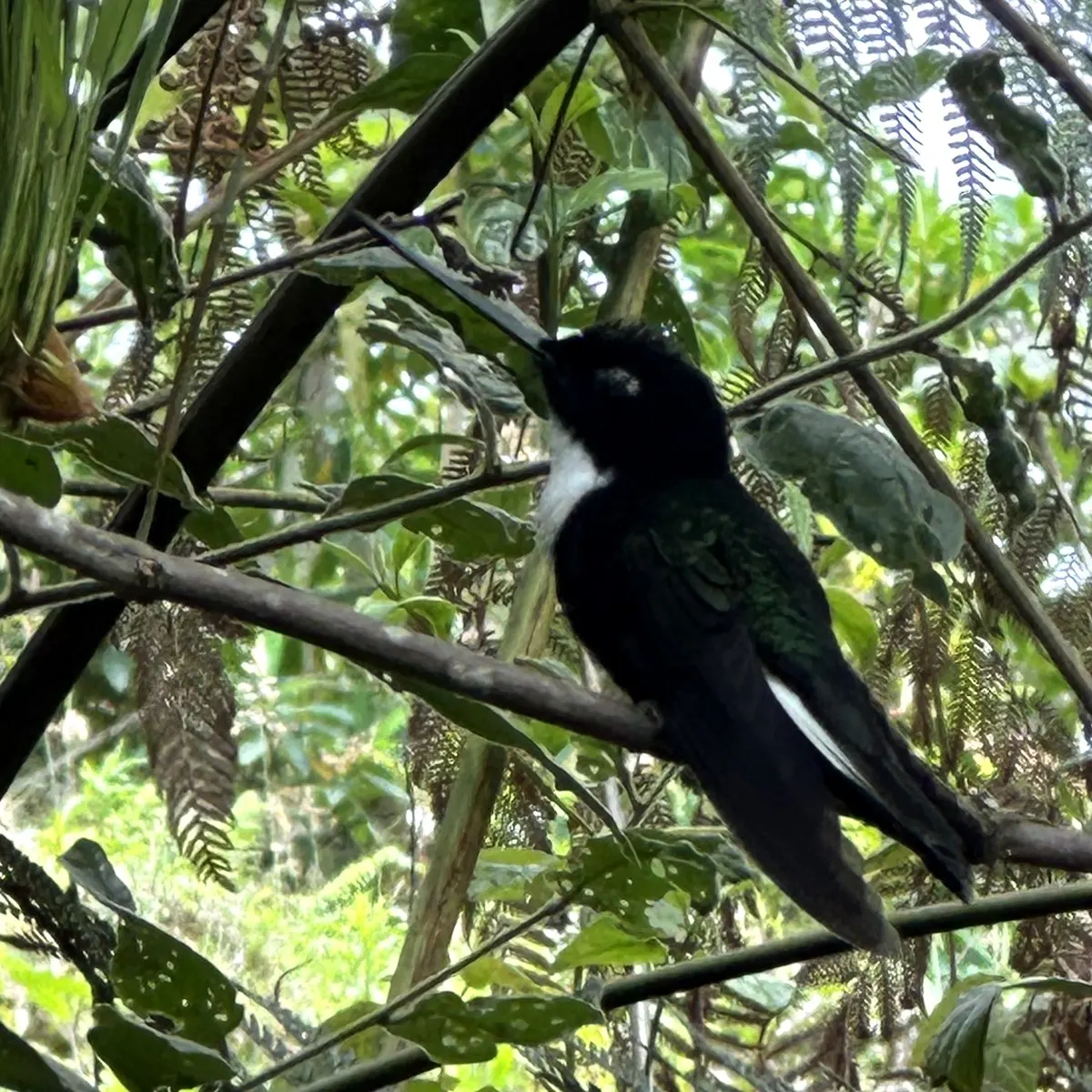
Where do hummingbirds sleep at 2,330 m, around Cuyuja?
On sheltered perches, through nights that are cool and damp all year. Our farm sits far lower than that study site. The parish government gives a mean temperature of 10–16 °C and humidity above 80% all year. Papallacta, about 1,000 m higher, has minimums of 5–6 °C, according to Wikipedia.
Temperature is only part of the story. Wikipedia notes that torpor happens across a wide range of temperatures. The energy saved depends more on day length and how long the bird stays torpid. Close to the equator, nights last about 12 hours all year, so every night is a long fast.
We know of no torpor measurements taken at our altitude. So we won't claim how deep the birds of our valley go.

What happens at dawn?
The bird shivers itself warm, then heads straight for food. Blair Wolf told Science News Explores that torpid birds warm about one degree a minute by vibrating their muscles. Then their eyes suddenly pop open.
After a night on fat reserves, refuelling is urgent. Hummingbirds rely on fresh sugar to power flight and keep their fat for the overnight fast, says Wikipedia. That is why native flowers and a clean feeder matter early in the day. See what hummingbirds eat.
How to tell a torpid hummingbird: 5 signs
A torpid hummingbird looks dead but usually isn't. Wolf said they are so still you'd think they were dead. Look for these signs:
- It sits upright and very still on a twig or a feeder.
- Its feathers are fluffed out, making it look rounder than usual.
- Its bill points upward.
- It may hang upside down after slipping on its perch.
- It is night, dawn or a cold spell, the times when torpor is most likely.
What to do if you find one
Leave it alone. Journey North's advice is to let the bird come out of torpor at its own pace so no harm is done.
- Don't touch or pick it up. It will wake by itself as it warms.
- Keep pets and people away while it rewarms.
- Give it time. At 1 to 1.5 °C a minute, warming from 18 °C to about 40 °C takes roughly 15 to 22 minutes (our arithmetic from the Wikipedia rates).
- Get help only if needed. If it is on the ground, injured, or still motionless long after the day has warmed, contact your local wildlife authority or a licensed rehabilitator.
So, where do hummingbirds sleep?
On a sheltered twig, alone, or on the nest if they have chicks. On cold or hungry nights they go further and enter torpor. In the Andes that state can be extreme. If you find one, admire it from a distance and let it wake up on its own. That, in short, is where do hummingbirds sleep: hidden, still and close to their morning flowers.
Where do hummingbirds sleep? FAQ
Where do hummingbirds sleep at night?
On small branches in sheltered spots, out of the cold. Females with young sleep in the nest. Some even fall asleep on a feeder.
Where do hummingbirds sleep in winter?
In sheltered spots, and often in torpor. The Anna's Hummingbird in our top photo spent a −8 °C December night torpid on a feeder in Vancouver, Canada.
Do hummingbirds sleep upside down?
Not on purpose, but a bird in torpor can end up hanging upside down from a perch or feeder. It is usually not dead, just deeply torpid.
What is hummingbird torpor?
A deep, sleep-like state in which metabolism slows to about 1/15 of normal and body temperature drops. It lets a hummingbird survive the night on very little fat.
How cold does a hummingbird get in torpor?
It depends on the species and the night. A Caribbean hummingbird dropped from 40 to 18 °C, and one Andean Black Metaltail fell to 3.26 °C, a record for any bird.
How long does hummingbird torpor last?
From about 2 to 13 hours in high Andean species, says Wikipedia. Birds rewarm at roughly 1 to 1.5 °C per minute before they can fly.
What should I do if I find a torpid hummingbird?
Leave it alone and let it wake at its own pace. If it is on the ground, injured, or still motionless long after the day has warmed up, call your local wildlife authority.
Sources
- "Hummingbird", Wikipedia (torpor: metabolism, body temperature, heart rate, duration, cooling and rewarming rates, weight loss, kidney function, fat and dominance).
- Wolf, McKechnie, Schmitt, Czenze, Johnson and Witt (2020), Extreme and variable torpor among high-elevation Andean hummingbird species, Biology Letters 16(9): 20200428.
- Science News Explores, One hummingbird survives cold nights by nearly freezing stiff (posture, heart rate, energy savings, rewarming).
- Smithsonian's National Zoo and Conservation Biology Institute, Hummingbirds (torpor, normal body temperature).
- BirdWatching, Where do hummingbirds sleep? (roost sites, females on the nest).
- Journey North, Conserving energy (torpid birds hanging upside down, let them wake on their own).
- GAD Parroquial de Cuyuja, Datos generales (climate); "Papallacta", Wikipedia (temperatures).