What do hummingbirds eat? Flower nectar for energy and small insects and spiders for protein. Every species eats insects, and Audubon says they eat about half their body weight in bugs and nectar each day. Here is how they feed, what chicks eat and the safe 1:4 feeder recipe, from our farm in Cuyuja, Ecuador.
What do hummingbirds eat in a day?
A lot, and often. Audubon says hummingbirds eat about half their body weight in bugs and nectar each day. They feed every 10–15 minutes and visit 1,000–2,000 flowers a day.
Their flight is costly. Wikipedia puts their energy use at the human equivalent of 150,000 calories a day. Their water intake can reach five times their body weight per day, most of it from nectar.
1. Nectar: the fuel
Nectar is their main energy source, and its sugar powers their flight. Hovering, flying backwards and diving take an enormous amount of energy. Hummingbirds get it from the sugar in nectar. Flowers pollinated by hummingbirds make fairly weak nectar, on average about 25% sugar, rich in sucrose. That's why a hummingbird visits flowers all day long.
They are also fast at using it. Newly eaten sugar can fuel hovering flight within 30–45 minutes. Few other vertebrates can do that.
At night, or when food runs short, hummingbirds can enter torpor. This state is similar to hibernation. It slows their metabolism to about one-fifteenth of normal and saves their small fat reserves.
2. What do hummingbirds eat besides nectar?
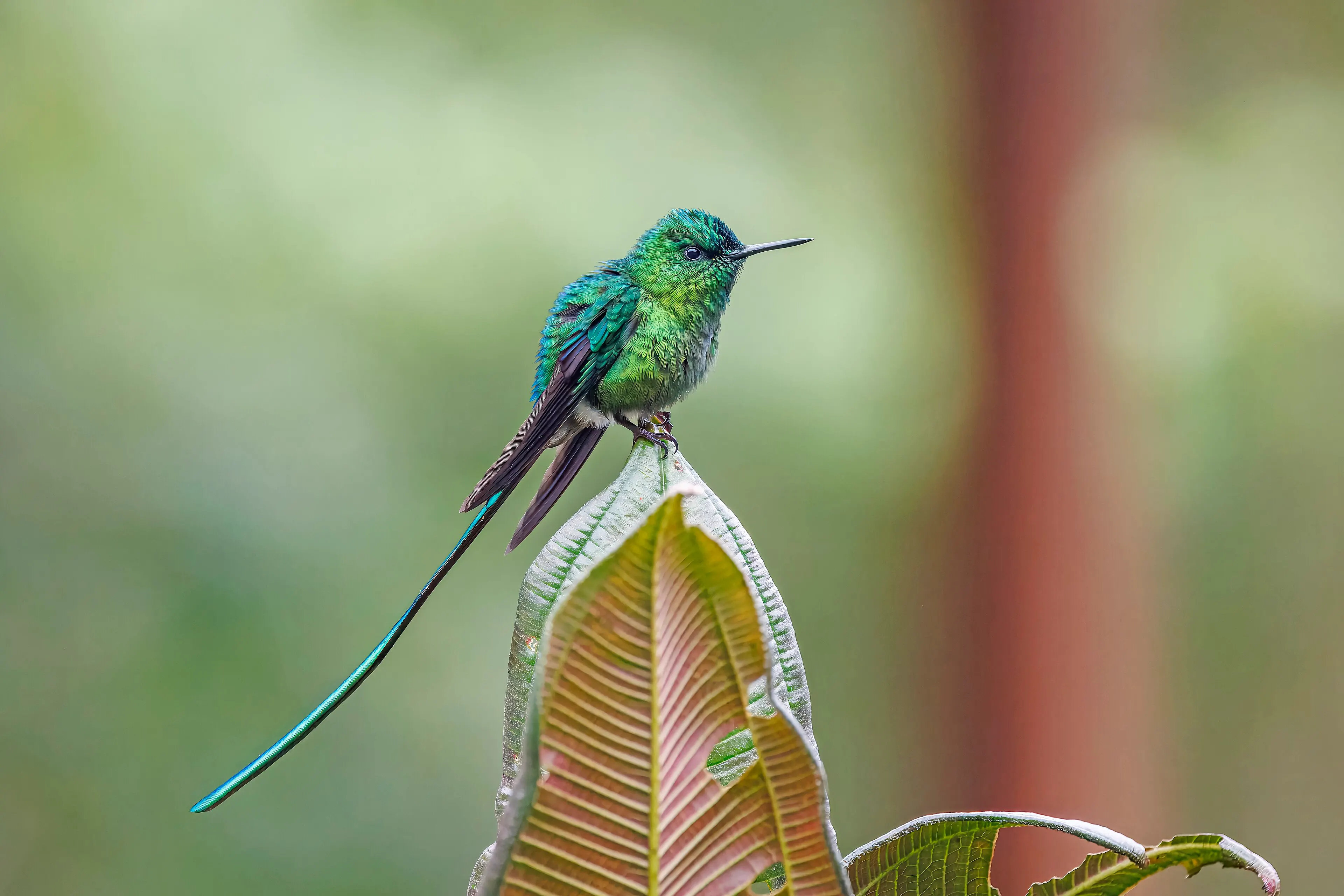
Insects and spiders, which give them protein. Many people think hummingbirds live on nectar alone, but every species also eats small insects. Some catch them in mid-air from a perch, like the long-tailed sylph or the coronets of the Andes. Others pick them off leaves.
That protein matters most in the breeding season. So a hummingbird garden should never be sprayed with pesticides.
3. What do baby hummingbirds eat?
The mother raises the chicks alone. She feeds them small arthropods and nectar. She puts her bill into the chick's open mouth and regurgitates the food into its crop. The young leave the nest about three weeks after hatching.
Found a baby hummingbird? If it's in or near its nest, leave it. The mother is usually close by even if you can't see her. Don't try to raise it on sugar water alone: it also needs the protein from insects. If it's injured, contact a licensed wildlife rehabilitator or your local wildlife authority.
4. What flowers do they feed on?
They feed on tubular, mostly red or orange flowers that match their bills. Hummingbird flowers are usually tubular, hanging or pointing sideways, and have little scent. They tend to be red, orange, pink or purple. Each species' bill fits certain flowers.
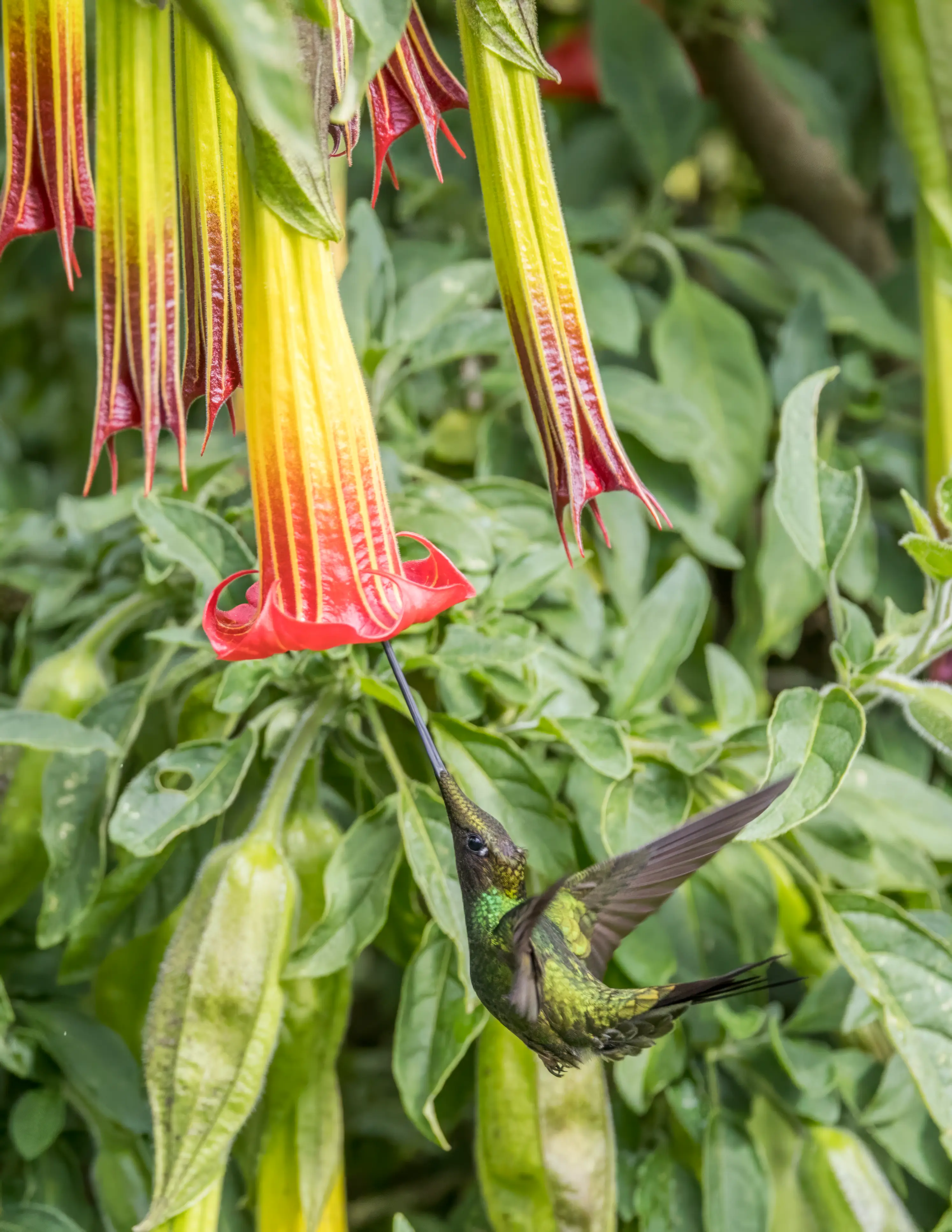
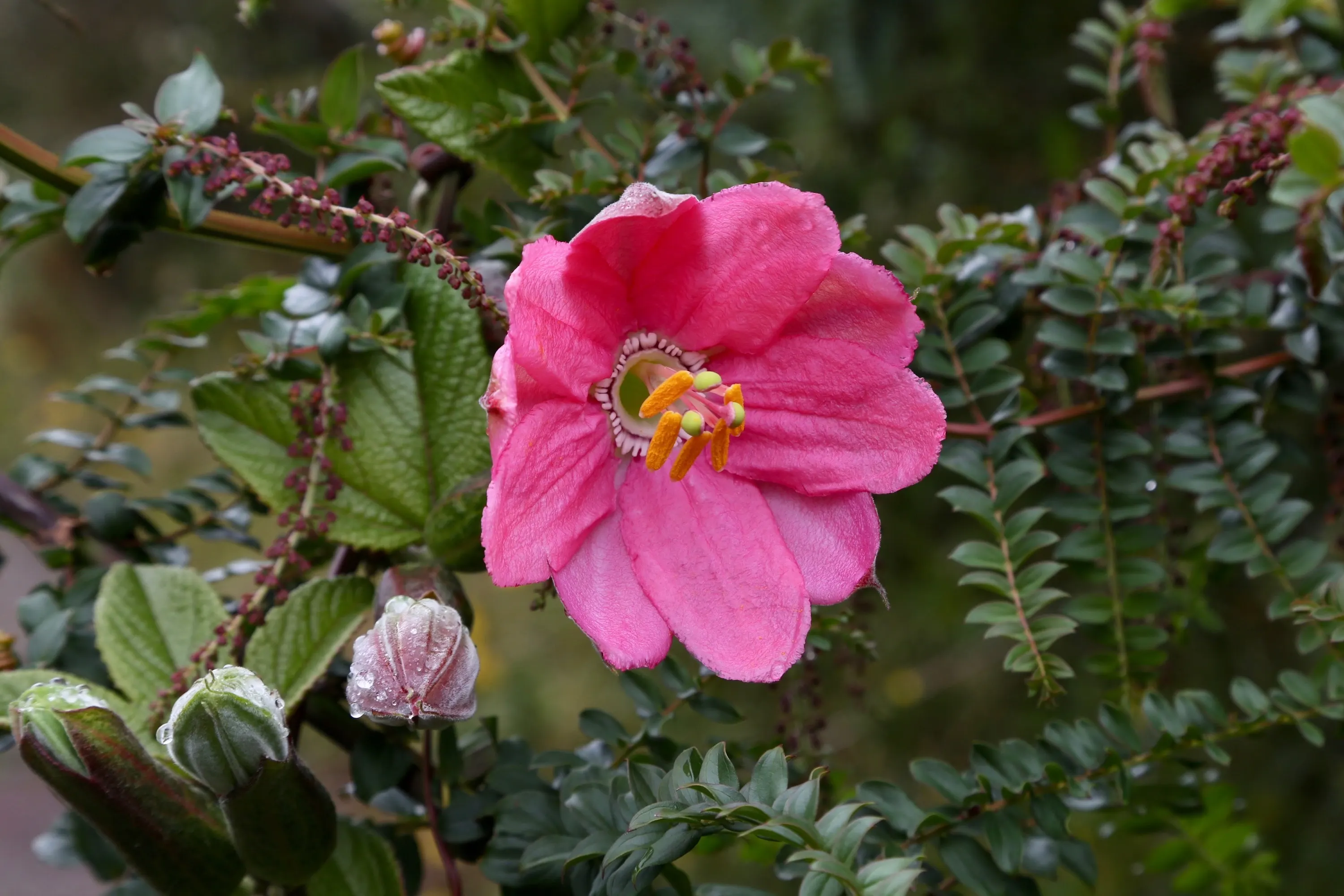
The sword-billed hummingbird, for instance, depends on the tacso passionflower, whose floral tube is extremely long. The native plants we grow for them.
What do hummingbirds eat in the Andes cloud forest?
Around Cuyuja, at about 2,330 m, the menu is native flowers plus insects. These are some of the plants that local hummingbirds use:
- Tacso and red angel's trumpet: long tubes for the Sword-billed Hummingbird.
- Bromeliads and other epiphytes: favoured by the Collared Inca.
- Siphocampylus and Centropogon: preferred by the Mountain Velvetbreast.
- Native fuchsias and bomareas: visited by many species.
- Mistletoes on the trees: some, like Tristerix longebracteatus, are pollinated by hummingbirds.
5. What do hummingbirds eat at a feeder? The 1:4 recipe
- 1 part plain white sugar to 4 parts water (for example, ¼ cup sugar in 1 cup water).
- Stir until dissolved and let it cool before filling the feeder.
- No red dye, no honey, no sweeteners. The red parts of the feeder are enough to attract them.
- Change the nectar before it turns cloudy, and more often in hot or humid weather.
- Wash the feeder every week with 1 part white vinegar to 4 parts water, and rinse well.
Why no honey or dye? Audubon warns that honey can promote dangerous fungal growth. Red food colouring is not needed and could harm the birds.
This is exactly the recipe we will use at San Pedrito. We serve it alongside native flowers, so the birds always have their natural food too.
Common mistakes to avoid
Most feeder mistakes come from trying to help too much. Keep it simple and clean.
- Making the nectar stronger than 1:4 "to help them".
- Using honey, brown sugar, sweeteners or red dye.
- Leaving cloudy nectar in the feeder.
- Spraying the garden, which kills the insects the chicks need.
- Feeding only from feeders, with no flowers around.
Where to watch hummingbirds feeding in Ecuador
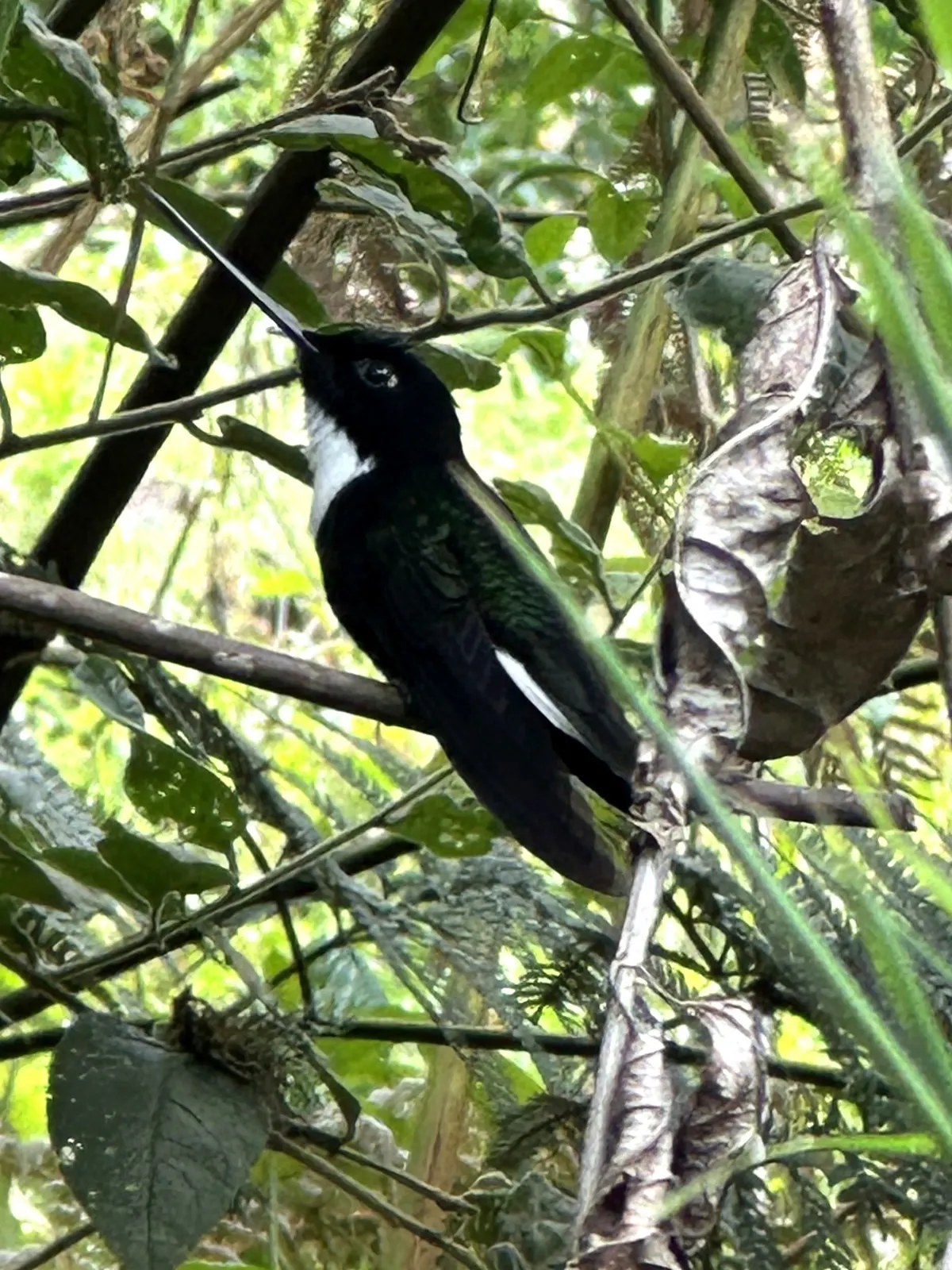
Ecuador has recorded 136 hummingbird species. In the cloud forest of Cuyuja, on the Papallacta–Baeza road, a bird survey recorded 14 species. One of them is the collared inca, which we have photographed on our farm. Meet the hummingbirds of our valley or plan a visit.
What do hummingbirds eat? FAQ
What do hummingbirds eat?
Flower nectar, which fuels their flight, and small insects and spiders, which give them protein. Every hummingbird species eats insects, not only nectar.
What do baby hummingbirds eat?
The mother feeds them small arthropods and nectar. She puts her bill into the chick's open mouth and regurgitates the food into its crop. Chicks leave the nest about three weeks after hatching.
What is the right hummingbird food recipe?
One part plain white sugar to four parts water. Dissolve, let it cool, and serve. No red dye, no honey, no sweeteners.
How often should I clean a hummingbird feeder?
Change the nectar before it turns cloudy, and more often in warm or humid weather. Wash the feeder about once a week with 1 part white vinegar to 4 parts water, then rinse well.
How often do hummingbirds eat?
Very often. Audubon says they feed every 10–15 minutes and visit 1,000–2,000 flowers a day. At night, or when food is short, they can drop into torpor, slowing their metabolism to about 1/15 of normal.
Sources
- "Hummingbird", Wikipedia (diet, nectar, energy use, torpor, nesting).
- Audubon, How to make hummingbird nectar (1:4 recipe, daily intake, honey and dye).
- Wikipedia: Collared inca, Mountain velvetbreast, Tristerix longebracteatus.