
Male vs. female hummingbirds: males usually wear a glittering throat patch, the gorget, and brighter colours, while females are plainer and raise the chicks alone. In many groups females have longer bills. Here is how the sexes differ, with six species from the cloud forest around Cuyuja, Ecuador.
Male vs. female hummingbirds: the short answer
Check the throat first, then the tail, then the size of the bill. Those three clues sort out the sexes of most species.
There are about 375 hummingbird species, according to Wikipedia. In most of them the sexes look different, a pattern biologists call sexual dimorphism. Males have more brilliant head, neck, wing and breast feathers. Females tend to be duller, often with paler or speckled underparts. A few species break the rule, and the Andes have some good examples.
What makes a male hummingbird look different?
Mostly his gorget: a bib of iridescent throat feathers that flashes when he faces you. Many males also grow longer or more forked tails.
The gorget is a signal. Wikipedia describes it as a patch that changes brilliance with the viewing angle, used to attract females and to warn rival males away. Its colour is structural. Tiny melanin structures in the feathers split the light, so a throat can look black one second and blaze pink or green the next. That flash is the quickest way to sort male vs. female hummingbirds.
Courtship can be dramatic too. In some species the male dives from about 30 m above a female, at around 83 km/h. After mating he leaves. Hummingbirds are polygynous, and males give no parental care.
What do female hummingbirds look like?
Females are usually plainer, with paler, often speckled underparts and less glitter on the throat. They also do all the work at the nest.
She builds a cup-shaped nest about 3.8 cm across, incubates the eggs for two to three weeks and feeds the chicks by regurgitation. In many clades females also have longer, more curved bills. Those bills suit nectar from tall flowers.
Size: are females bigger?
Sometimes. In small hummingbird species males tend to be smaller than females, and in large species males tend to be larger.
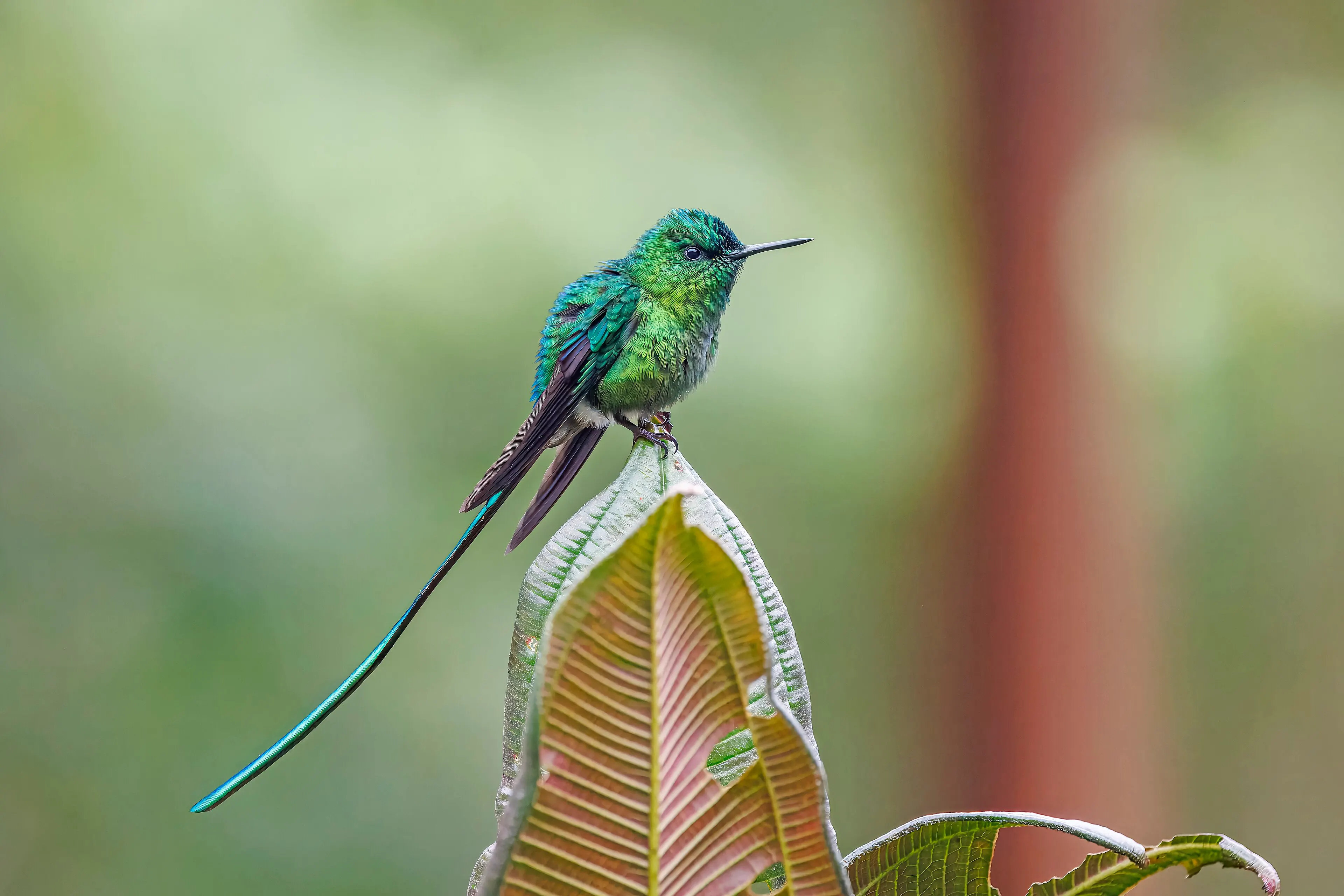
This pattern is known as Rensch's rule, and Wikipedia notes that hummingbirds follow it. The Andes show how much it varies. A male long-tailed sylph, with his tail, measures 16–19 cm, while the female is only 9.7–11.7 cm. In the tourmaline sunangel the weight ranges overlap: males 3.5–8.5 g, females 4–5.2 g.
Male vs. female in 6 Andean hummingbirds
All six are recorded in the cloud forest along our road, between Papallacta and Baeza. Each shows a different way the sexes can differ. The table compares male vs. female hummingbirds side by side. The details come from our species guides, which follow each bird's Wikipedia account.
| Species | Male | Female | Easiest clue |
|---|---|---|---|
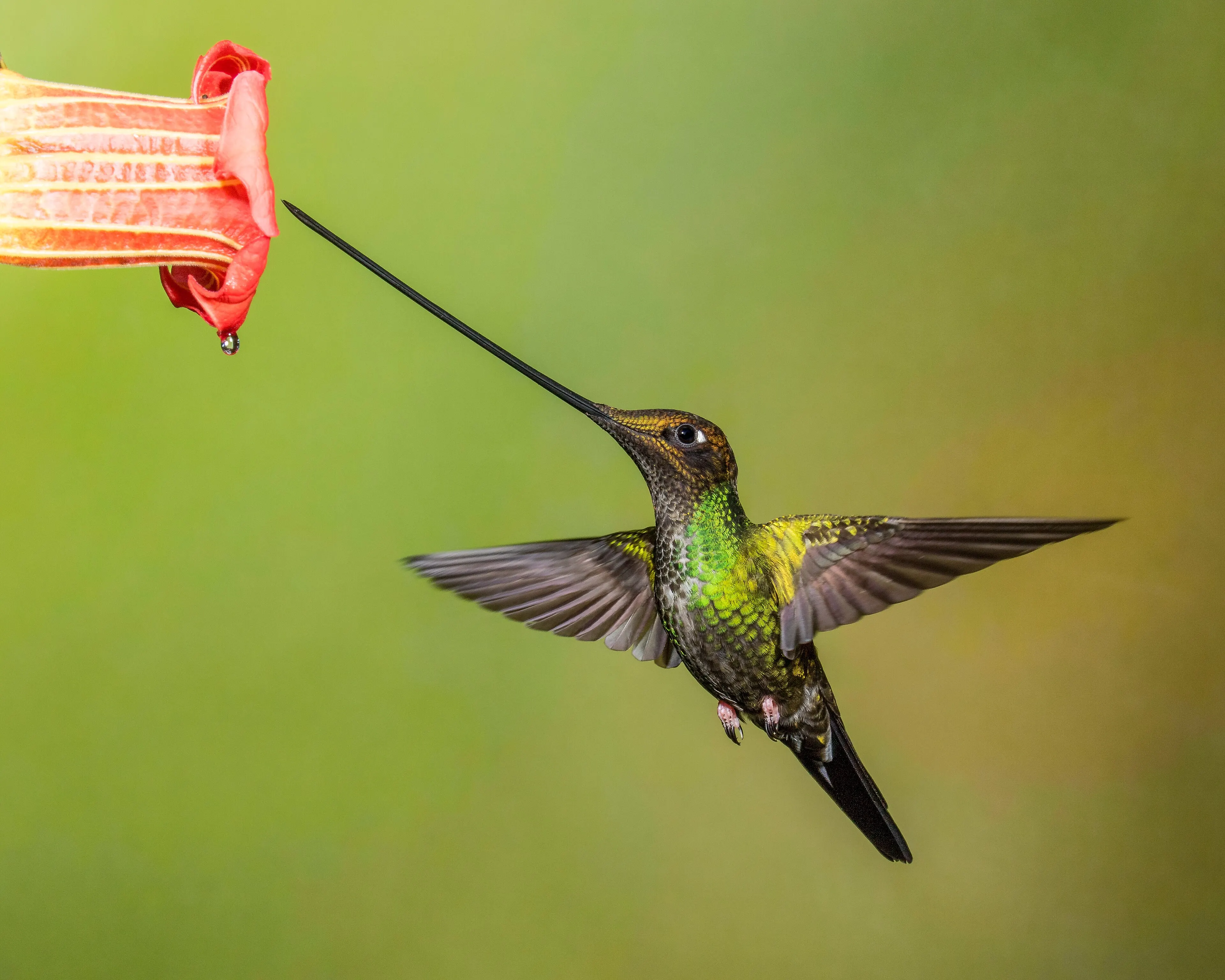
| Sword-billed hummingbird | Green below, forked tail; shorter bill, longer wings and tail | Whitish below, speckled green; less forked, grey-edged tail | Belly colour |
| Collared inca | Violet forehead patch, green throat | Slightly lighter green, duller throat with some white, smaller chest patch | Forehead |
| Long-tailed sylph | 16–19 cm with outer tail feathers of about 12 cm; blue to violet throat | 9.7–11.7 cm; short forked tail tipped white; cinnamon underparts | Tail length |
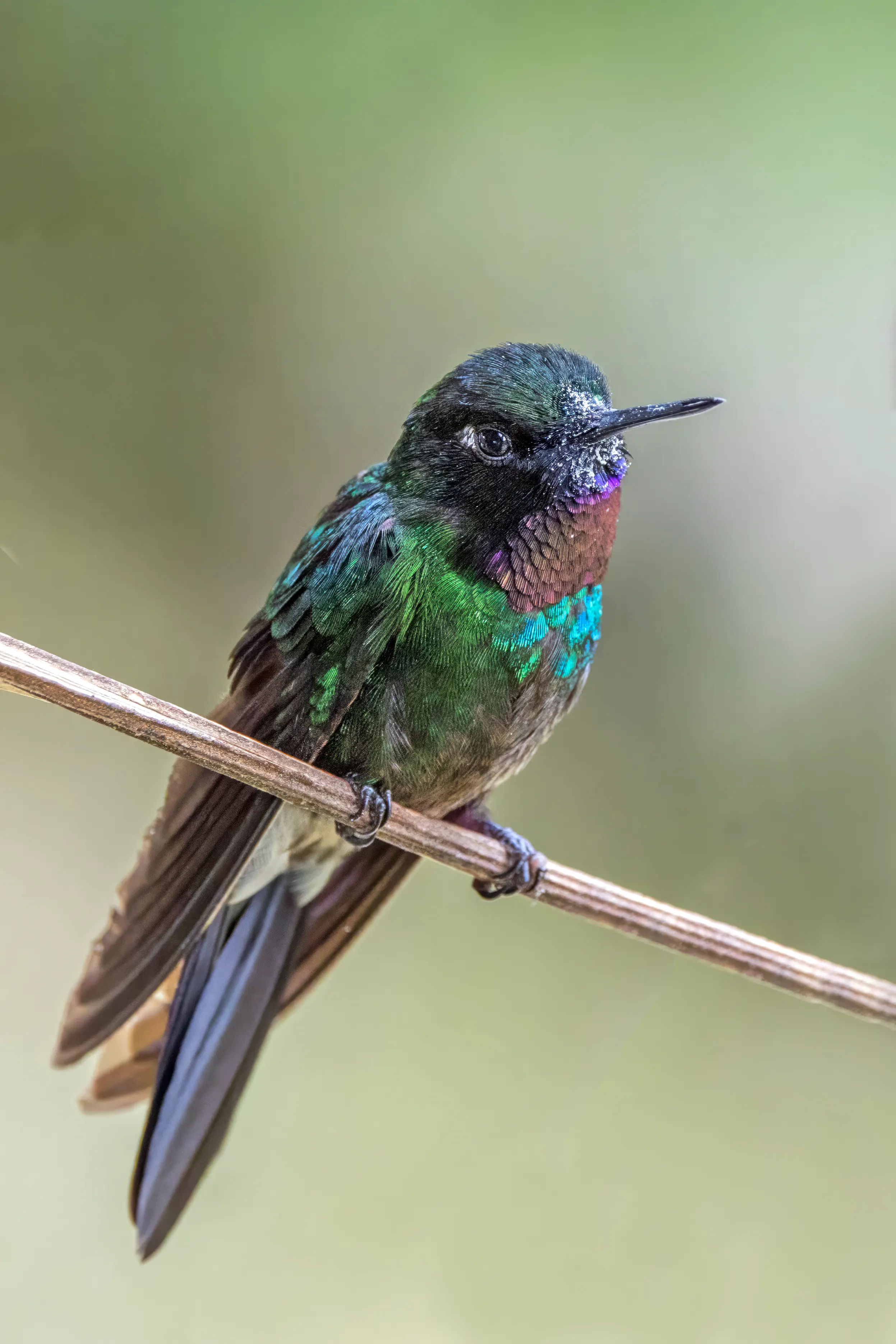
| Tourmaline sunangel | Green spot above the bill, purple-blue chin, rosy-pink throat | No forehead spot; whitish, speckled throat, sometimes a few rosy feathers | Pink throat |
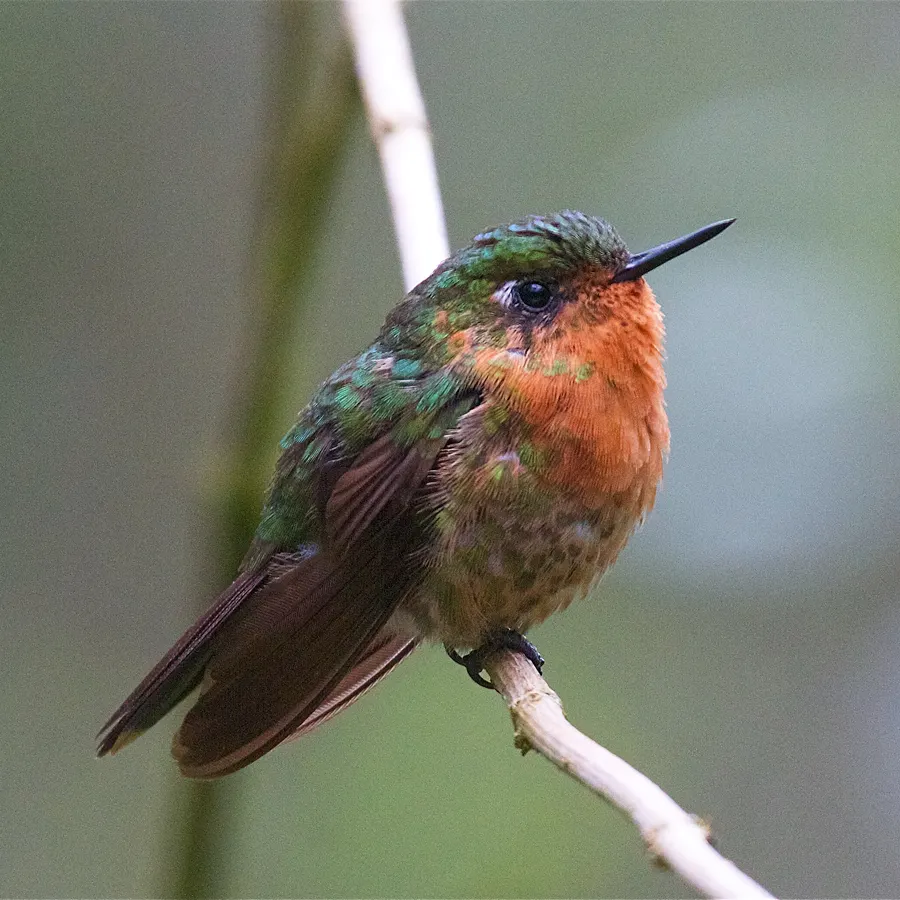
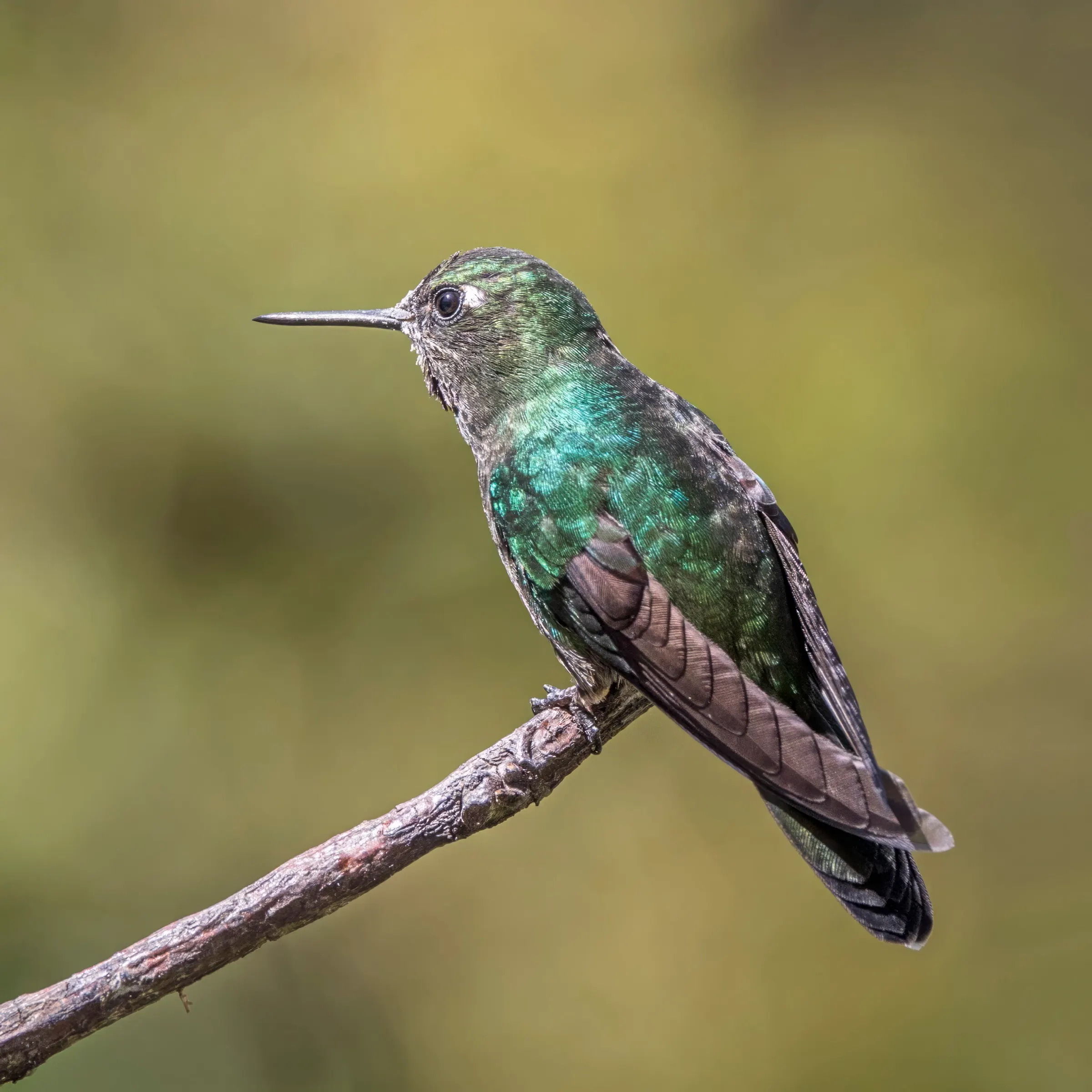
| Chestnut-breasted coronet | Green above, reddish-chestnut below | Almost the same; a little paler below | Hard to tell |
| Buff-tailed coronet | Green with buffy, green-spotted belly; buff tail with bronze tips | More buff below, less bronze on the tail | Hard to tell |
Sword-billed hummingbird: the female has the longer sword
Both sexes carry the famous 8–12 cm bill. Even so, males have shorter bills than females, but longer wings and tails. The easiest clue is the belly: green in the male, whitish with green speckles in the female. Read the full sword-billed hummingbird guide.
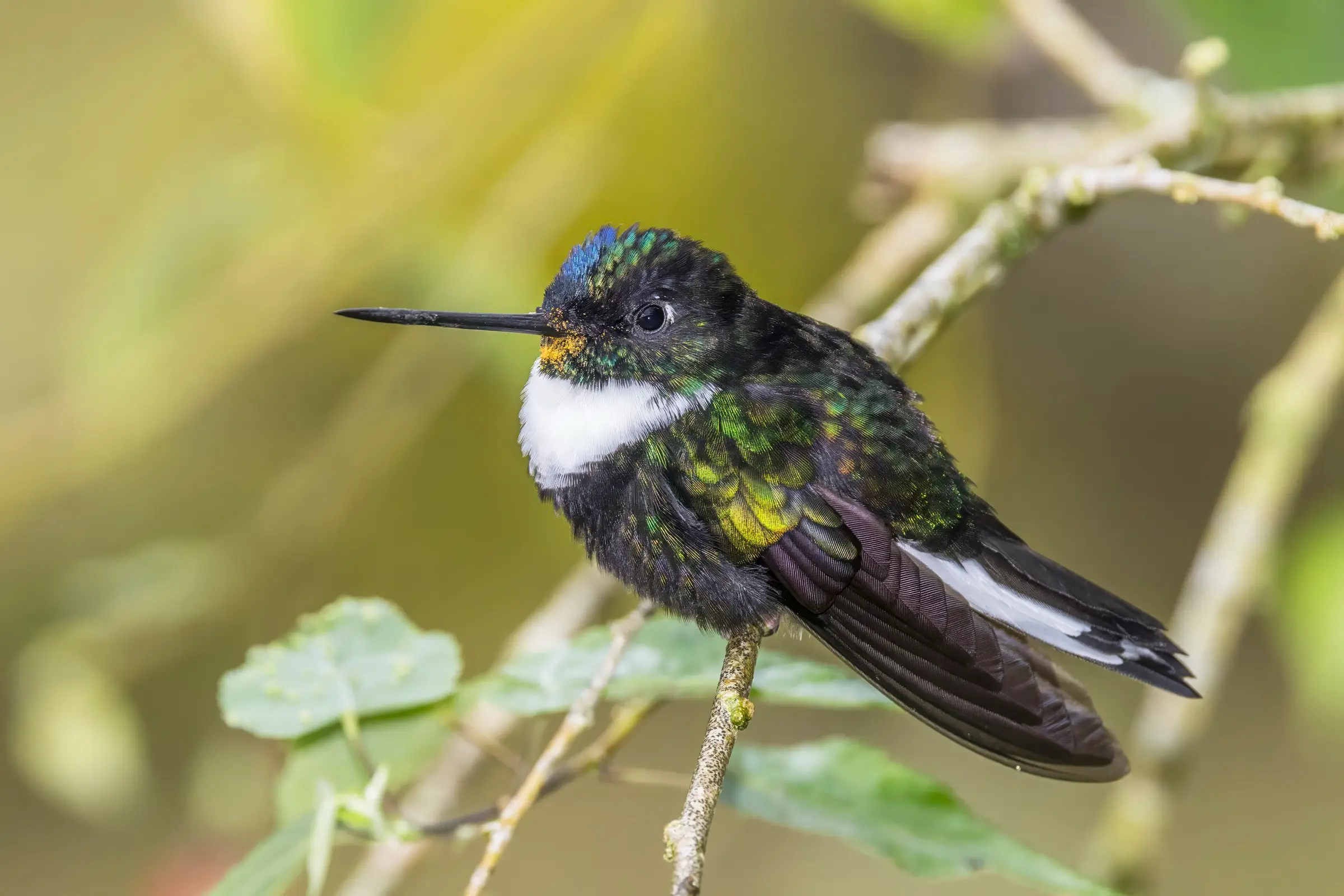
Collared inca: a violet forehead
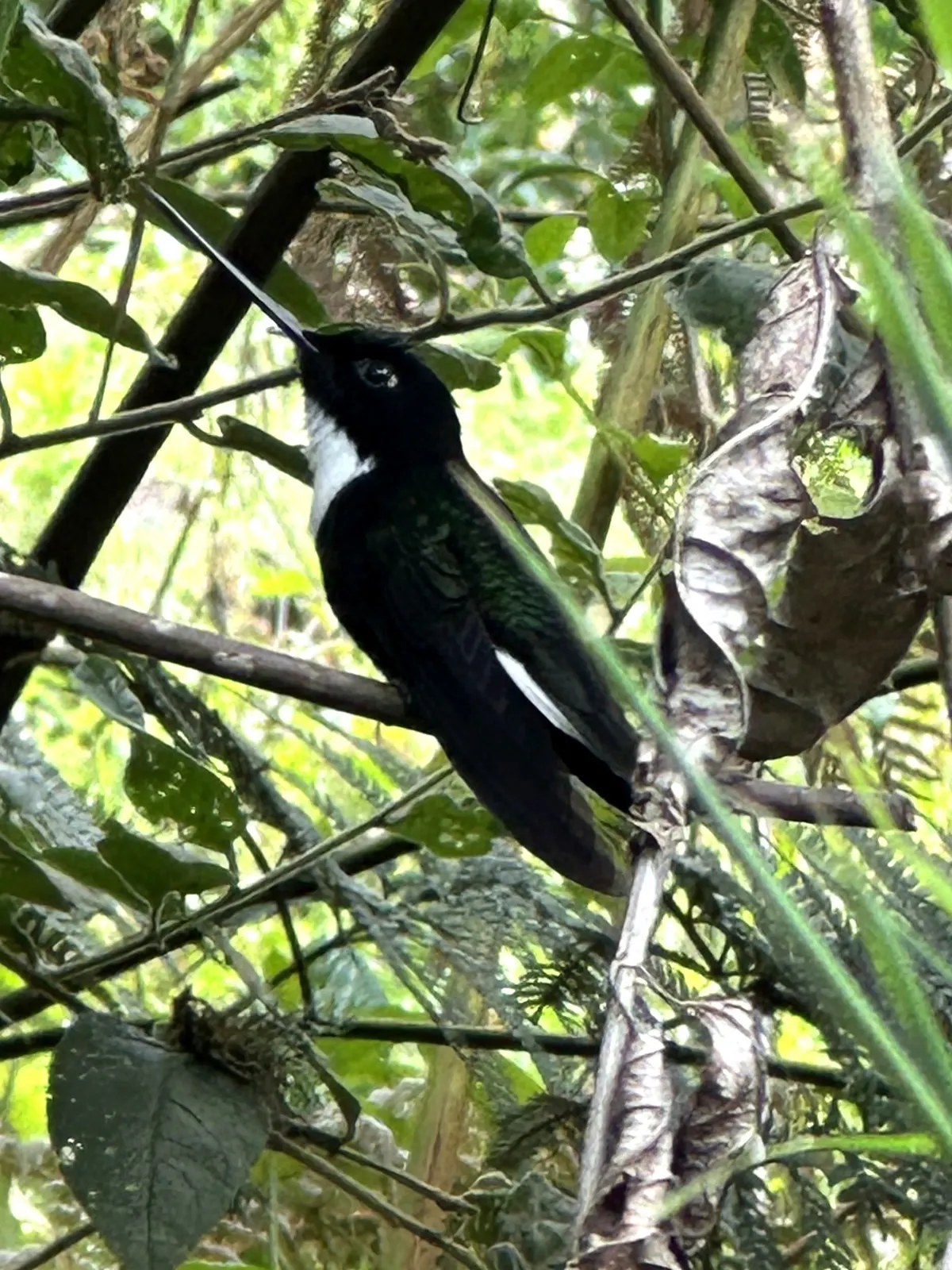
In dim forest light both sexes look black with a white bib. In good light the male shows a shimmering violet forehead and a green throat. The female is slightly lighter green, with a duller throat and a smaller white patch. This is the one hummingbird we have photographed on our own farm. More on the collared inca.
Long-tailed sylph: the tail says it all
This is the clearest case of male vs. female hummingbirds in the Andes. The male trails outer tail feathers about 12 cm long. The female has a short, forked tail tipped white and a warm cinnamon belly, so she is easy to mistake for another species. Sylph ID tips.
Tourmaline sunangel: a pink flash
The male's throat glitters rosy pink, like the gem in its name, with a green spot above the bill. The female has no forehead spot and a whitish, speckled throat. Young males show a white chin. Tourmaline sunangel guide.
Coronets: almost identical
Here dimorphism nearly disappears. Male and female chestnut-breasted coronets look almost the same; the female is only a little paler below. In the buff-tailed coronet, females have more buff below and less bronze on the tail. In the field you usually cannot sex a coronet. They are the hardest male vs. female hummingbirds puzzle on our road. Coronet ID guide.
7 tips to identify male vs. female hummingbirds
Use these checks in order to sort male vs. female hummingbirds. Good light matters more than anything, because iridescent colours vanish in shade.
- Wait for the bird to face you. A gorget only flashes at the right angle.
- Check the throat. Solid glitter usually means a male; pale and speckled often means a female.
- Look at the belly. Whitish, cinnamon or speckled underparts point to a female in several Andean species.
- Measure the tail by eye. Very long or deeply forked tails usually belong to males.
- Compare bill lengths when two birds of one species sit side by side.
- Watch the behaviour. A bird visiting a nest is a female, because males give no parental care.
- Accept "unknown". In coronets and young birds, sex is often impossible to call in the field.
Where to compare the sexes in Ecuador
Feeders and flowering gardens are the easiest places to compare male vs. female hummingbirds, because birds return again and again at close range. Around Cuyuja, at about 2,330 m, the cloud forest and the Guango feeders 11 km away have records of all six species above. Meet the hummingbirds of our valley, read about photographing hummingbirds, or plan a visit to Finca San Pedrito, 30 minutes past Papallacta. We are not open yet. Telling male vs female hummingbirds apart takes patience, so watch the same bird a few times before you decide.
Male vs. female hummingbirds: FAQ
How can you tell male vs. female hummingbirds apart?
Look at the throat, the tail and the overall colour. Males usually have a glittering gorget and brighter plumage; females are plainer, often paler below. In some species the bill or tail length differs too.
Are female hummingbirds bigger than males?
It depends on the species. Wikipedia notes that hummingbirds follow Rensch's rule: in small species males are smaller than females, while in large species males are larger.
Do female hummingbirds have longer bills?
In many groups, yes. Females often have longer, more curved bills. The Andean sword-billed hummingbird is one example: males have shorter bills than females.
Why are male hummingbirds so colourful?
To attract females and warn rival males. The male's gorget changes brilliance with the viewing angle, so it flashes when he faces you.
Do male hummingbirds help raise the chicks?
No. The female builds the nest, incubates the eggs and feeds the chicks alone. Males take no part in parental care.
Which Andean hummingbirds look almost the same in both sexes?
The coronets. Male and female chestnut-breasted coronets are almost identical; the female is only a little paler below.
Sources
- "Hummingbird", Wikipedia (species count, plumage dimorphism, gorget, Rensch's rule, bill dimorphism, courtship dives, nesting, polygyny).
- Wikipedia species accounts: Sword-billed hummingbird, Collared inca, Long-tailed sylph, Tourmaline sunangel, Chestnut-breasted coronet, Buff-tailed coronet.